Local SEO vs SEO: 7 Critical Differences You Must Know

Local SEO vs SEO is not a subtle distinction. They use different algorithms, target different audiences, require different assets, produce results on different timelines, and reward different types of effort.
For a business that serves local customers, treating them as interchangeable often means investing months into traditional organic SEO while leaving Local Pack positions, which capture 44% of clicks for commercial searches, completely uncontested.
Here are the seven differences that change how any local business should sequence its marketing investment.
Table of Contents
Local SEO vs SEO: The Direct Answer
Local SEO targets location-based results in the Local 3-Pack, Google Maps, and local organic listings using Google’s Relevance, Distance, and Prominence algorithm. Traditional SEO targets national or global blue-link organic results using Google’s content authority algorithm. Both require a well-built website. But local SEO needs three additional unique assets that traditional SEO does not use: a verified Google Business Profile, consistent NAP citations, and a systematic review generation program. Local SEO shows results in 4 to 12 weeks. Traditional SEO typically takes 3 to 12 months.
What Traditional SEO Is (and Is Not)
Traditional SEO optimizes your website to rank in Google’s standard blue-link results for non-geographic queries.
When someone searches “how to reduce business tax,” “best CRM software 2026,” or “symptoms of vitamin D deficiency,” they see traditional organic results. These results can be viewed by anyone, anywhere. A London-based accountancy firm that writes the most authoritative article about tax efficiency can rank for readers in Dublin and Sydney simultaneously.
Traditional SEO is built on three pillars: the comprehensiveness and quality of your content, the authority of websites that link to your pages, and the technical quality of your site.
Traditional SEO is not what determines whether your business appears when someone searches “accountant near me” in your city. That is an entirely separate system.
What Local SEO Is
Local SEO optimizes your online presence for location-based results.
When someone searches “accountant Manchester,” “plumber near me,” or “best Italian restaurant Birmingham,” Google’s local algorithm activates. Results are filtered by geography. A Manchester accountancy firm ranks in Manchester. No amount of traditional SEO work makes it rank in Liverpool for the same local query.
Local SEO targets three result types: the Local 3-Pack (the map with three business listings at the top of results), Google Maps, and local organic results below the map.
Local SEO vs SEO: 7 Critical Differences
Difference 1: The Result Types Each System Targets
Traditional SEO targets standard blue-link results visible globally. Geographic location of the searcher is irrelevant to whether a page ranks.
Local SEO targets geographically filtered results. The Local Pack and Maps results only appear for searchers in relevant proximity to the businesses shown. A Bristol restaurant does not appear in the Local Pack for someone in Edinburgh searching “Italian restaurant near me.”
These are completely separate result types generated by completely separate systems. A business can rank in both, one but not the other, or neither, depending entirely on which optimizations have been completed.
Difference 2: The Algorithms That Decide Rankings
Traditional SEO uses PageRank. It evaluates content authority through inbound links, content depth and relevance, technical performance, and expertise, authority, and trustworthiness signals.
Local SEO uses Google’s local algorithm built on three pillars: Relevance (does this business match the query?), Distance (is it close enough?), and Prominence (is it trusted and active?). The input signals are different. The ranking mechanisms are different.
Reviews are a direct ranking signal in local SEO at 17% of ranking weight. Reviews have no direct ranking role in traditional organic SEO.
GBP category selection is the most important decision in local SEO. It has no equivalent in traditional SEO.
Difference 3: The Unique Assets Local SEO Requires
Traditional SEO requires: quality content, inbound links from authoritative sites, and strong technical site performance.
Local SEO requires all of the above plus three additional assets that traditional SEO does not use.
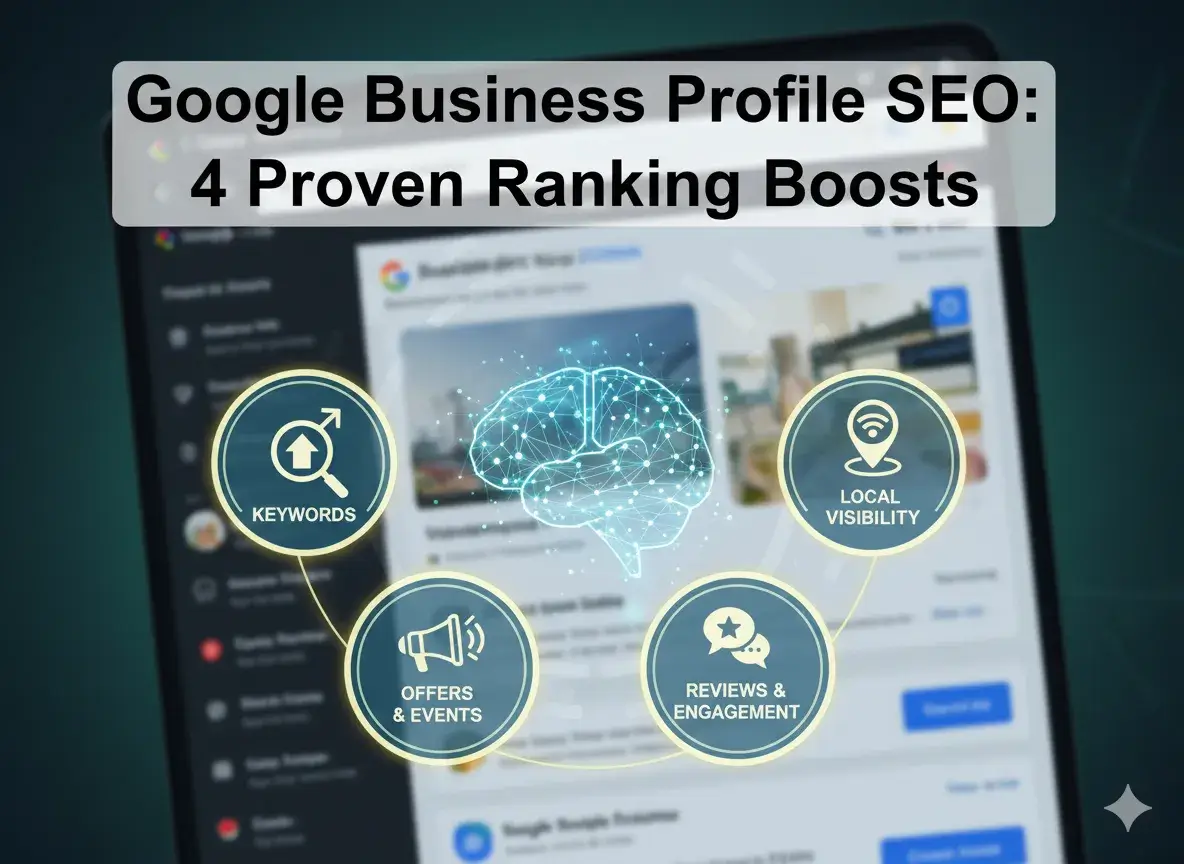
A verified, optimized Google Business Profile. GBP signals control 32% of local map pack ranking factors. Without a verified GBP, you are ineligible to appear in the Local Pack.
Consistent NAP citations. Traditional SEO has no equivalent requirement. Local SEO needs your business name, address, and phone number to match exactly across hundreds of online directories.
A systematic review generation program. Traditional SEO does not use customer reviews as a direct ranking signal. Local SEO gives them 17% of total ranking weight.
Difference 4: The Role of Customer Reviews
In traditional SEO: review schema markup can display star ratings in organic snippets to improve click-through rate. Reviews do not affect page ranking position directly.
In local SEO: reviews are a core Prominence signal accounting for up to 17% of local pack ranking weight. Volume, velocity, recency, star rating, and review text content all directly influence your Local Pack position.
The practical implication: if your business serves local customers and you have not built a systematic review generation program, you are leaving one of your most powerful ranking levers completely unused.
For the complete review strategy, read our guide on do Google reviews help SEO.
Difference 5: The Role of Google Business Profile
Traditional SEO: a website can rank for any organic keyword without a GBP. The two systems are completely separate.
Local SEO: a verified GBP is the non-negotiable foundation. GBP signals control 32% of local ranking factors. Without a verified, optimized GBP, a business is disqualified from Local Pack consideration entirely, regardless of website quality.
Difference 6: The Timeline for Results
Traditional SEO: meaningful organic ranking improvements typically take 3 to 12 months. Building content authority requires sustained investment over many months.
Local SEO: initial Local Pack movement typically appears in 4 to 12 weeks of foundational optimization completion. Low-competition areas can see visibility in 2 to 4 weeks. A category correction on an existing GBP can produce movement in 2 to 4 weeks.
If you need results this quarter, local SEO delivers a significantly shorter feedback loop. For local businesses that need calls and bookings from search rather than content traffic, local SEO is the right starting priority.
Difference 7: The Cost to Start
Traditional SEO: requires meaningful content investment from day one. Creating content comprehensive enough to rank for competitive queries requires significant time or budget. Effective link building adds further cost. A realistic monthly budget for serious traditional SEO is $1,000 to $3,000.
Local SEO: the foundations are mostly free. GBP, Bing Places, Apple Maps, Yelp, and Facebook Business are all free. Review generation costs nothing. Tier 1 citation submissions cost nothing. Paid tools like BrightLocal add value at $29 per month once the free foundation is complete.
What Both Share (And Why Investing in One Helps the Other)
Despite their differences, local SEO and traditional SEO are complementary, not competing.
Website quality affects both. A fast, mobile-friendly, technically sound website improves Local Pack rankings (through on-page signals at 36% of local ranking influence) and traditional organic rankings simultaneously.
Backlinks benefit both. Local backlinks from community sources build domain authority for organic rankings and directly contribute to your Prominence signal for local rankings. The same link does work in both systems.
Content depth helps both. Comprehensive service pages that help local SEO also rank for informational queries in traditional organic results.
Which Should Your Business Prioritize?
Prioritize local SEO first if: you have a physical location customers visit or you serve customers in specific geographic areas, your revenue is driven by calls, bookings, or in-person visits, or you operate in services, retail, food, healthcare, or professional services. You need results within 90 days. Local SEO delivers faster results at lower starting cost and directly targets the highest-intent buyers.
Prioritize traditional SEO first if: you sell products nationally without geographic constraints, your revenue comes from e-commerce without physical locations, or you target B2B customers who research extensively before purchasing.
Most local businesses should do both, in sequence. Execute local SEO first. It is faster, less expensive to start, and targets customers at the moment of purchase decision. Once local SEO is generating consistent leads, layer traditional SEO content to capture earlier-stage buyers and build topical authority.
For the specific free strategies that give small businesses the fastest local search results, read our guide on local SEO for small business.
A Concrete Example of Why Sequence Matters
Two businesses launch in the same city at the same time.
Business A starts with a blog content strategy. They publish twice per week. After eight months they are beginning to rank for some informational queries and earning content traffic. But they have received almost no local customers from search because they never optimized their GBP, built citations, or generated reviews.
Business B spends their first week setting up a complete GBP with the correct category, listing every service, and uploading professional photos. They submit to Tier 1 citations and aggregators. They build a review system and start generating three to four reviews per month. By week eight they are in the Local Pack for their primary keyword. By month five they hold a consistent top-two position. Calls arrive daily.
In month 10, Business B adds a content strategy. By then they have an established Local Pack position generating consistent revenue that funds the content investment.
Business A is still waiting to see meaningful business results from their content investment.
The sequence matters. For local businesses, local SEO first.
Frequently Asked Questions
Can a business rank in both the Local Pack and organic results for the same query?
Yes. A business can appear in the Local Pack and also have a website page ranking in blue-link organic results below the map for the same keyword. Appearing in both positions significantly increases total visibility and click share for that query.
Is local SEO harder than traditional SEO?
Neither is objectively harder. Local SEO has a more structured, achievable set of foundational optimizations with faster feedback. Traditional SEO requires sustained content and link-building investment with a longer feedback loop. For local businesses, local SEO is typically more accessible and delivers faster ROI.
Does hiring an agency for local SEO make sense?
For single-location businesses in moderate markets, the DIY approach following this guide delivers strong results. For highly competitive multi-location markets, agencies add genuine value through scale, specialist tools, and accumulated competitive intelligence. If you are in a competitive market and have plateaued despite completing all foundational work, an agency consultation is worth considering.
Key Takeaways
- Traditional SEO targets national organic results; local SEO targets geographic results using a completely separate algorithm
- Local SEO requires three unique assets traditional SEO does not: a verified GBP, NAP citations, and customer reviews
- Reviews account for 17% of local pack weight but have no direct ranking role in traditional organic SEO
- Local SEO shows results in 4 to 12 weeks; traditional SEO typically takes 3 to 12 months
- Local SEO foundations are primarily free; traditional SEO requires meaningful content and link-building investment
- Most local businesses should prioritize local SEO first and layer traditional SEO content as a second phase
For the complete local SEO strategy, return to our comprehensive local SEO guide.