How to Choose the Right SEO Strategy: 4 Proven Frameworks for 2026

Choosing the wrong SEO strategy is more costly than doing no SEO at all. Six months of effort pointed in the wrong direction leaves you further behind than when you started.
Knowing how to choose the right SEO strategy is the single most important SEO decision you will make. A local restaurant investing in national content SEO will not get more customers. A SaaS company building only local citations will not rank for product keywords.
This guide gives you four proven decision frameworks to identify the strategy most likely to deliver results for your specific business, goals, resources, and timeline.
Table of Contents
How to Choose the Right SEO Strategy: The 4-Question Framework
Before choosing a strategy, answer four questions. Your answers will point directly to the correct approach.
Question 1: Who are you trying to reach? Local customers in a specific area, or a national and global audience with no geographic restriction?
Question 2: What is your primary business goal? Drive leads and phone calls, generate online sales, build brand authority and thought leadership, or attract investors and partnerships?
Question 3: What are your resources? DIY with limited time, a small internal team, or budget for a freelancer or full agency?
Question 4: What is your timeline? Quick wins in 90 days or a 12-month authority-building foundation?
Your Answers Point to One of Four Strategies
| Audience | Primary Goal | Resources | Timeline | Best Strategy |
|---|---|---|---|---|
| Local | Leads and calls | DIY to small | 90 days | Local SEO |
| National | Brand authority | Medium budget | 12+ months | Content-led SEO |
| Any | Online sales | Medium to large | 6-12 months | eCommerce SEO |
| B2B any | Lead generation | Medium | 6-12 months | Content plus technical |
| Large site | Rankings recovery | Larger budget | 6+ months | Technical-first SEO |
The 4 Proven SEO Strategy Types
Each strategy type serves a specific business situation. Understanding all four helps you make a confident choice and avoid the most common mismatch mistakes.
Strategy 1: Local SEO
Best for: Businesses serving customers in a specific geographic area. Restaurants, dental practices, law firms, contractors, retailers, medical clinics, and real estate agents all belong here.
Core principle: Help people nearby find your business when they search for what you offer.
What it focuses on:
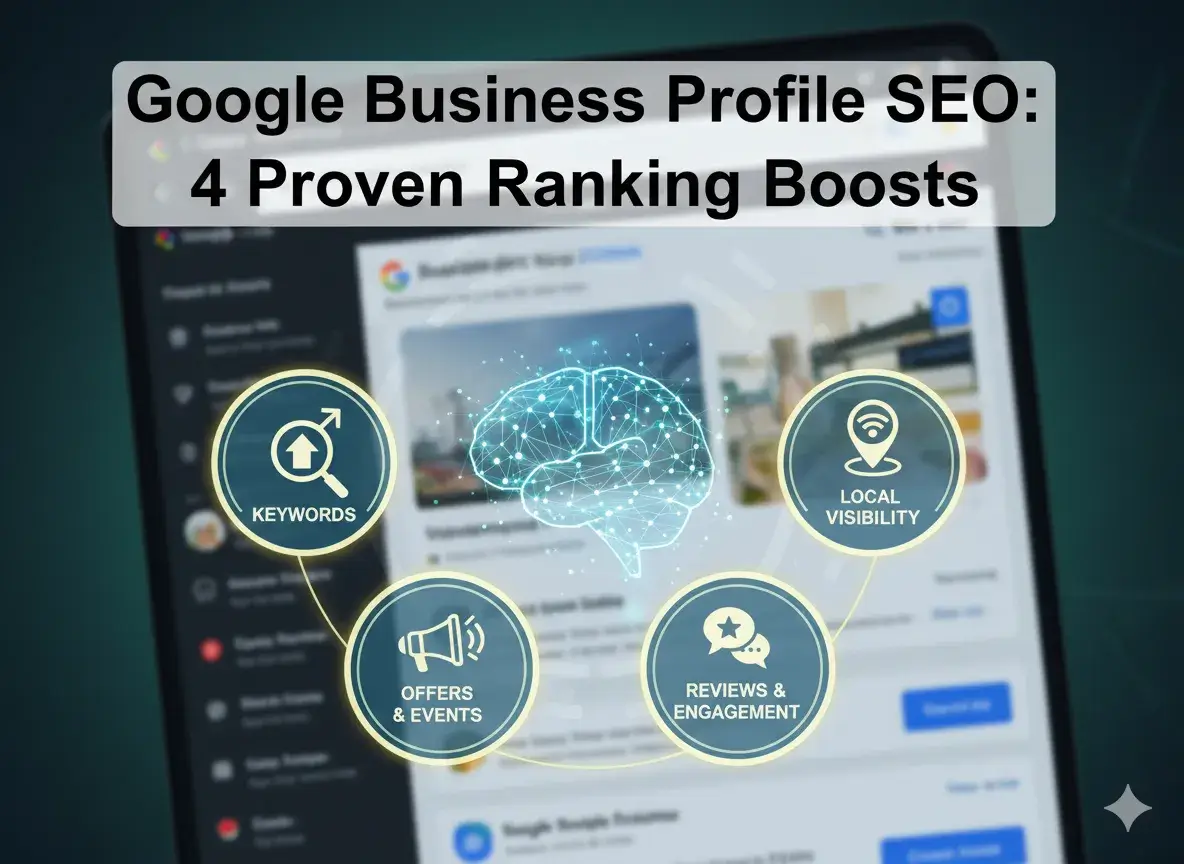
Google Business Profile (GBP) is the foundation of local search visibility. A fully optimized profile with accurate NAP (Name, Address, Phone), specific categories, services listed with descriptions, high-quality photos, regular posts, and an active review strategy dramatically improves your Google Local Pack placement.
Local citations are consistent listings of your business NAP across directories including Yelp, Yellow Pages, Bing Places, Apple Maps, and industry-specific directories. Consistency across these citations signals legitimacy to Google’s local ranking algorithm.
Location-specific content targets keywords with geographic modifiers: “best family dentist in [city],” “[city] emergency plumbing,” “wedding photographer [city].” These pages serve both local SEO and on-page relevance signals.
Review acquisition is a significant local ranking factor. A consistent strategy for requesting and responding to Google reviews builds both rankings and user trust simultaneously.
Local link building from local news sites, chambers of commerce, and community organizations carries strong local authority signals.
Timeline: First results often appear within 60-90 days, especially from Google Business Profile optimization and citation building.
Not right for: Businesses with no physical location, entirely remote services targeting national audiences.
For a complete comparison of local vs. national approaches, read: Local SEO vs National SEO: 7 Powerful Differences.
Strategy 2: Content-Led SEO (Topical Authority)
Best for: Blogs, media companies, B2B brands, SaaS products, professional service firms, and any business targeting a national or global audience through expertise and information.
Core principle: Become the recognized authority on your topic area by publishing comprehensive, interconnected content that covers the subject more thoroughly than anyone else.
What it focuses on:
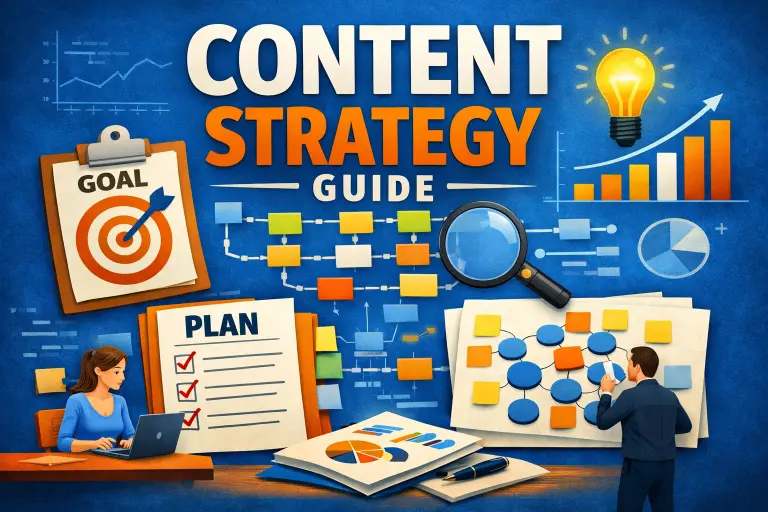
Pillar and cluster content architecture is the structural backbone. Pillar pages cover a broad topic comprehensively. Cluster articles target specific subtopics and long-tail keyword variations within that topic. Internal links between all cluster pages and the pillar reinforce topical authority.
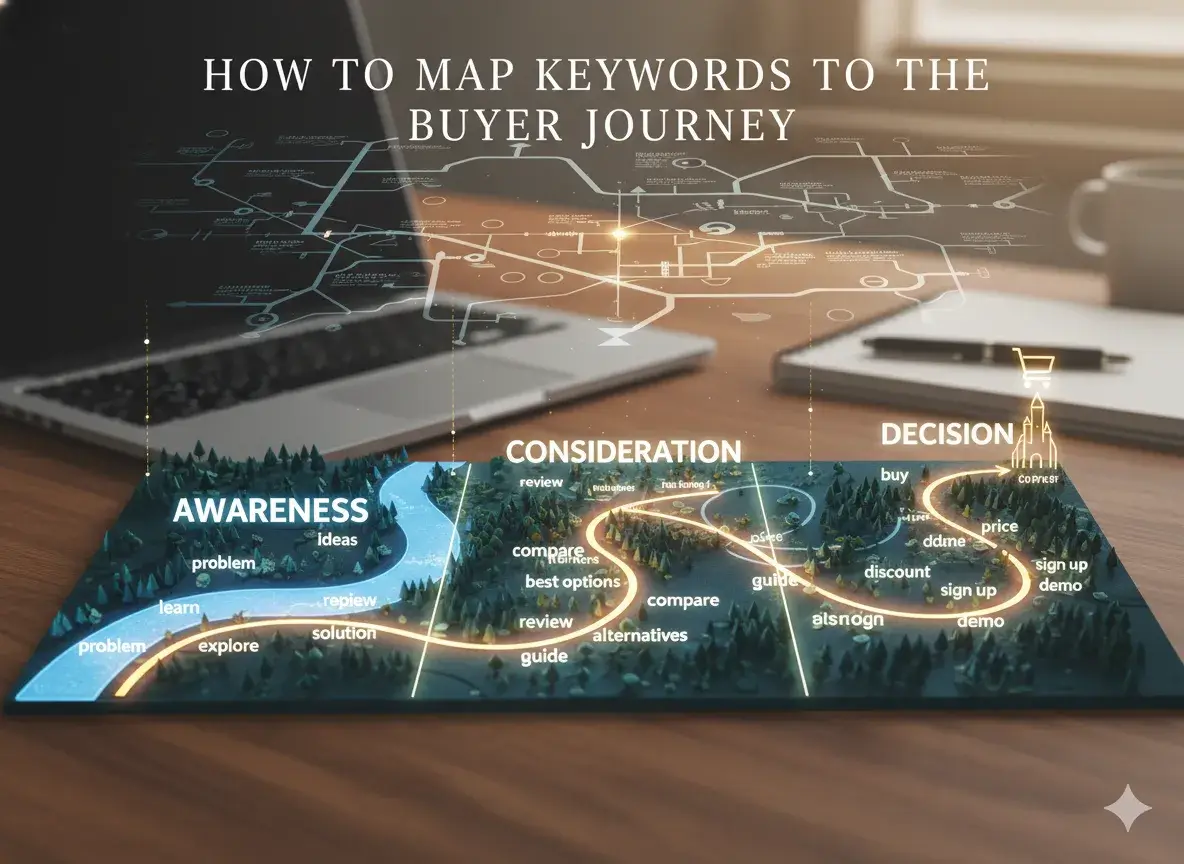
Keyword research and intent mapping identifies the full range of terms your audience searches across the entire buyer journey. From awareness questions (“what is [topic]?”) through consideration (“best [product] for [use case]”) to decision terms (“buy [product] online”).
Long-form, expert content that answers questions more thoroughly than competing pages. Quality and first-hand expertise matter more than volume in 2026.
Strategic link acquisition through digital PR, guest posting, and original research earns backlinks from authoritative industry publications.
E-E-A-T optimization demonstrated through author credentials, original data, real-world case examples, and transparent sourcing.
Timeline: First page one rankings for long-tail keywords at months 3-6. Competitive head terms require 9-18 months of consistent effort.
Not right for: Businesses with no content creation capacity, or businesses whose customers primarily find them through local search.
Strategy 3: Technical-First SEO
Best for: Large websites (10,000+ pages), eCommerce stores with extensive catalogs, sites recovering from Google algorithm penalties, and businesses where existing pages have crawlability or indexation problems.
Core principle: Fix the infrastructure before adding any new content. Technically broken sites cannot rank regardless of content quality.
What it focuses on:
Comprehensive site audit using Screaming Frog and Google Search Console to identify crawl errors, indexation issues, page speed problems, duplicate content, broken redirects, and Core Web Vitals failures.
Crawl architecture optimization restructures the site so important pages are accessible within three clicks, low-value pages are excluded from crawling, and crawl budget is spent efficiently on priority content.
Core Web Vitals improvement optimizes LCP (loading speed), INP (interactivity), and CLS (visual stability) using Google PageSpeed Insights recommendations.
Duplicate content resolution implements canonical tags, consolidates similar pages, and removes thin or automatically generated content.
Structured data implementation adds schema markup across priority page types to enable rich results.
Timeline: Technical fixes often produce faster ranking improvements than content work. Some pages can recover significantly within 4-8 weeks of resolving critical issues.
Not right for: Brand-new sites with no existing content. Local businesses whose primary need is Google Business Profile optimization.
For the complete technical checklist, see: Technical SEO Tasks: 25 Critical Fixes That Boost Rankings.
Strategy 4: eCommerce SEO
Best for: Online retailers, marketplace sellers, DTC brands, and any business whose primary revenue comes from product sales through a website.
Core principle: Rank product pages and category pages for high-intent transactional keywords while building content authority to support earlier buying stages.
What it focuses on:
Category page optimization is often the highest-value work in eCommerce SEO. Add unique descriptive content, implement BreadcrumbList schema markup, and build internal links from blog content to category pages.
Product page optimization includes unique product descriptions (not manufacturer copy), Product schema markup enabling price and availability rich results, optimized image alt text, and keyword-aligned title tags.
Faceted navigation management prevents large eCommerce sites with filters (color, size, price, brand) from generating thousands of near-duplicate URLs that waste crawl budget and create duplicate content issues.
Blog content supporting the buyer journey includes comparison content, buying guides, and how-to articles that build topical authority and funnel traffic toward transactional category and product pages.
Timeline: Technical and on-page work on existing pages can show results within 2-4 months. Content-driven category authority takes 6-12 months.
How to Choose Between DIY, Freelancer, and Agency
Once you know your strategy type, the next decision is how to execute it.
| Execution Model | Best For | Monthly Investment | What You Get |
|---|---|---|---|
| DIY (in-house) | Small businesses, limited budgets | $0-$500 (tools only) | Full control, slower without expertise |
| Freelance SEO | Small to mid-size businesses | $500-$2,500 | Expert execution at specialist rates |
| SEO Agency | Growth-stage, competitive markets | $2,000-$10,000+ | Full campaigns with multiple specialists |
Questions to Ask Before Hiring an SEO Agency
- What does your onboarding process look like? (Should start with an audit, always.)
- What KPIs will you track and report on every single month?
- Can you share three examples of results for businesses in similar competitive situations?
- What specific link-building tactics do you use and why?
- What is your protocol when a Google algorithm update impacts our rankings?
When DIY SEO Makes the Most Sense
DIY SEO delivers genuine results in these situations:
- You are a local business with Google Business Profile as your primary tool
- Your competition is low to moderate in your geographic area
- You have 3-5 hours per week available to invest consistently
- Your budget is better invested in content creation than consulting fees
Build Your SEO Strategy in 5 Steps
Once you have chosen your strategy type and execution model, translate that decision into a concrete plan.
Step 1: Audit Your Current Position
Install Google Search Console, run a Screaming Frog crawl, and document your baseline. Record current keyword rankings, monthly organic traffic, technical issues found, and total backlink count. This is your starting point.
Step 2: Define Specific Measurable Goals
“Improve SEO” is not a goal. “Rank in the top three for [keyword] by month six” is. Define three to five specific KPIs with target values and deadlines. Every decision you make will reference these goals.
Step 3: Select Your Strategy Type
Use the four-question framework and decision matrix above. Commit to your primary strategy for at least 90 days before evaluating it.
Step 4: Build Your Keyword Map
For local SEO: map geographic modifier keywords to location pages. For content SEO: build a pillar and cluster topic map. For eCommerce: map transactional and comparison keywords to product and category pages.
Step 5: Create a 90-Day Execution Plan
Break the strategy into specific weekly actions. Week one: audit and setup. Weeks two through four: technical fixes and on-page optimization. Month two: first content published. Month three: link building begins. Set monthly milestones so you know what “on track” looks like.
For the task breakdown that powers every strategy type, visit: SEO Tasks: 40 Proven Actions That Skyrocket Rankings.
The 5 Most Common SEO Strategy Mistakes
Mistake 1: Choosing national SEO before winning locally.
If your customers are primarily local, competing for national keywords is a costly distraction. Dominate local search first, then expand.
Mistake 2: Building content before fixing technical issues.
New content published on a site with crawl errors or indexation problems will consistently underperform. Fix the foundation first.
Mistake 3: Focusing only on rankings, not conversions.
Ranking first for a keyword that does not attract buyers improves vanity metrics but not revenue. Target keywords with clear commercial intent.
Mistake 4: Changing strategy every 60 days.
SEO requires patience. Many business owners switch approaches right before results were about to arrive. Give your chosen strategy at least 90 days before evaluating.
Mistake 5: Ignoring E-E-A-T in competitive niches.
In finance, health, legal, and other high-stakes categories, Google applies stronger quality scrutiny. Author credentials, original data, and transparent sourcing are not optional in competitive markets.
Frequently Asked Questions
What is the best SEO strategy for a new website?
For a new website, start with technical foundations: Search Console setup, site audit, and sitemap submission. Then keyword-map existing pages and publish consistent content targeting long-tail keywords. For businesses with a local audience, add Google Business Profile optimization immediately.
How do I choose between local SEO and national SEO?
If more than 50% of your customers come from a specific city or region, start with local SEO. If your product or service reaches customers anywhere with no geographic restriction, focus on content-led national SEO. Many businesses benefit from both strategies running simultaneously once they have the resources.
How long does an SEO strategy take to show results?
Local SEO shows results within 60-90 days. Content-led strategies take 3-6 months for initial traction and 9-18 months for significant topical authority. Technical-first strategies can produce faster early wins within 2-4 months if critical issues are resolved.
Should I hire an SEO agency or do it myself?
This depends on competition level, budget, and available time. DIY SEO works well for local businesses in moderate-competition markets. For competitive national keywords or complex eCommerce sites, an experienced specialist typically delivers significantly better ROI than DIY execution.
What is topical authority in SEO?
Topical authority is the degree to which Google recognizes your website as a comprehensive, trustworthy source on a specific subject. It is built by creating interconnected, in-depth content that covers a topic thoroughly from multiple angles. Strong topical authority makes competitive keywords in your subject area significantly more achievable.
Key Takeaways
- Knowing how to choose the right SEO strategy requires answering four questions: audience, goal, resources, and timeline.
- The four strategies: local SEO, content-led SEO, technical-first SEO, and eCommerce SEO each serve a distinct business type.
- Local businesses should prioritize Google Business Profile and citations first. Content-led businesses need topical authority. Large sites need technical foundations.
- Match execution to budget: DIY for small and local, freelance for mid-size, agency for growth-stage competitive markets.
- The 5-step strategy build: audit, define goals, choose strategy type, build keyword map, create 90-day plan.
- The most expensive mistake is choosing a strategy that does not match your business model, then abandoning it before results arrive.
Your strategy is set. The next step is building the execution plan. Visit SEO Tasks: 40 Proven Actions That Skyrocket Rankings to map your weekly and monthly workflow against your chosen strategy.
Not sure if SEO is right for you first? Read Can SEO Help My Business: 8 Honest Answers That Work for context before committing.
Return to the full overview: Complete SEO Guide: 11 Proven Steps to Dominate Google in 2026