Your Website Has No Traffic Because You Used Clickbait That Hurt Your Reputation

We know exactly how it feels when traffic looks promising at first but then fades away. We have faced the same problem in the past. Our headlines were strong, people clicked, and the click-through rate was high. Yet the visitors did not stay, they did not return, and over time our rankings dropped. What seemed like a winning strategy turned into a setback. The reason was clear once we looked deeper: we had relied on clickbait.
Clickbait works by creating curiosity but fails when the content does not deliver on the promise. Visitors feel misled, leave quickly, and rarely come back. At scale, this behavior sends negative signals to Google. Low dwell time, high bounce rates, and poor repeat visitor numbers all tell the algorithm that the site is not satisfying its audience. We learned this lesson firsthand, and it forced us to change how we write and present our content.
The good news is that recovery is possible. The first step is to rebuild trust. That means aligning headlines with the actual value of the content and making sure every promise is fulfilled. It also means improving the depth of articles so that readers find genuine answers and reasons to stay. Over time, consistent delivery of useful content restores engagement signals and strengthens reputation.
In this blog, we will share what clickbait really does to a site, how Google measures the gap between promise and delivery, and the exact steps to fix the damage. More importantly, we will show you how to write headlines that attract clicks without misleading readers. If your website has lost traffic because of clickbait, this guide will help you understand the problem and rebuild with strategies that last.
Table of Contents
When Clicks Stop Coming Back
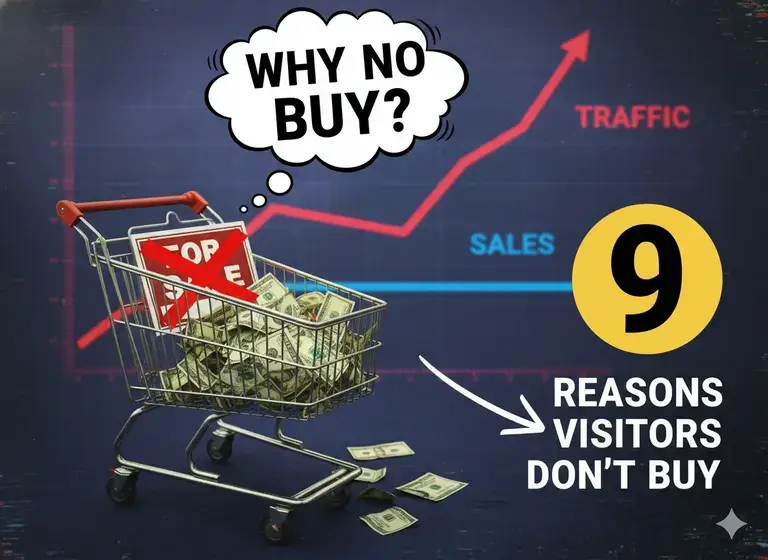
Your headlines were working. People clicked. The click-through rate was high. You thought the strategy was right. But the traffic never built the way it should have. Visitors arrived, looked at what they found, and left. The same people did not come back. Search rankings for your articles kept dropping over time even when the initial click performance looked strong.
That pattern tells a specific story. Clickbait creates a first impression that overdelivers on curiosity and underdelivers on substance. Visitors feel the gap. When that happens at scale, the behavioral signals feeding back into Google’s systems paint a clear picture: this site does not satisfy the people who visit it.
This article explains exactly how that mechanism works, how it damages your reputation and your rankings, and what you need to do to rebuild.
What Clickbait Actually Does to a Site
Think about the last time you clicked a headline that promised something extraordinary and the article delivered something ordinary. You felt the drop in the moment you read the first few sentences. You probably left quickly. You might have felt mildly deceived. You probably did not return to that site, and you might have consciously or unconsciously dismissed it as a low-quality source.
That experience, multiplied across thousands of visitors, is exactly what clickbait creates. The headline creates an expectation. The content fails to meet that expectation. The gap between the two is the problem, not the engaging headline itself.
Engaging headlines are a legitimate and important part of content creation. Promising something your content does not deliver is different. The first gets visitors to give your content a fair shot. The second gets visitors to feel tricked, leave quickly, and associate your brand with disappointment.
How Google Measures the Gap Between Promise and Delivery
Google does not read your headlines and automatically penalize you for writing something dramatic. What it measures is what happens after the click.
When a user clicks your result from the search page and returns to the search page within a few seconds, that pogo-sticking behavior tells Google the click did not result in a satisfying experience. If this pattern occurs consistently across your pages, it signals that your content is not delivering on the implicit promise of the search result.
Dwell time is the amount of time a visitor spends on your page before returning to search results. Low dwell time consistently across a site indicates that visitors are not finding what they came for. Google uses dwell time patterns as one of its quality evaluation signals. Pages with persistently low dwell time have a harder time holding top rankings.
Repeat visitor rate is another signal. Reputable sites build audiences that return. Sites that consistently disappoint visitors through misleading content do not build returning audiences. A site where almost no visitors ever come back is a signal of poor brand value.
The Brand Reputation Loop That Kills Organic Traffic
Clickbait damages organic traffic through a loop that compounds over time. Here is how the loop works.
You publish a clickbait headline. High initial CTR, brief spike in clicks. Visitors land and bounce quickly. Google observes the poor engagement. Your ranking for that article gradually drops. The CTR drops because lower rankings get fewer impressions. You publish more clickbait to try to get the next spike. The same cycle repeats, and each cycle produces smaller gains and larger losses than the last.
Meanwhile, your brand reputation is accumulating in the public record. People who felt tricked by your content are less likely to click your results in the future even when they do appear on the first page. Google tracks click behavior on search results. A result that gets passed over repeatedly is a signal that searchers do not trust or want that result.
There is also a social dimension. Users who feel misled share that experience. Negative brand impressions in social media, review sites, and web communities build over time and become part of the information Google uses to evaluate your site’s overall trustworthiness.
How Clickbait Damages Your E-E-A-T Signals
Google evaluates sites against a framework called E-E-A-T: Experience, Expertise, Authoritativeness, and Trustworthiness. These four dimensions inform how much confidence Google has in a site’s content.
Trustworthiness is the dimension most directly damaged by clickbait. A site known for misleading headlines is a site that cannot be trusted to deliver what it promises. This affects how Google’s quality raters assess your site when it is manually reviewed, and it affects the algorithmic signals that proxy for trustworthiness: engagement, return visits, and brand search volume.
Authoritativeness is damaged because authoritative sources in any field are known for accuracy and substance. When your content is associated with sensationalism or manipulation, it creates the opposite impression. People who are genuinely knowledgeable about a topic do not need to trick readers into clicking. They write headlines that are interesting because the substance behind them is interesting.
Experience and expertise signals are also undermined when your content does not actually demonstrate depth. Clickbait often points to shallow content because the headline was designed to generate clicks rather than because the writer had something genuinely valuable to say. The surface-level content that often accompanies clickbait headlines is itself an expertise signal problem.
E-E-A-T Signals Affected by Clickbait
| E-E-A-T Dimension | What It Requires | How Clickbait Damages It |
|---|---|---|
| Experience | Evidence of real firsthand engagement with the topic | Shallow content written for clicks shows no real engagement |
| Expertise | Accurate, deep, useful information | Clickbait points to thin, misleading, or incomplete content |
| Authoritativeness | Recognition and citation by others in the niche | Low-quality reputation reduces third-party citation |
| Trustworthiness | Consistent delivery on what is promised | Misleading headlines directly violate this signal |
Diagnosing Clickbait Damage in Your Analytics
Open Google Analytics and look at your Behavior reports. Check the average session duration and bounce rate for your top content pages. If your CTR from search is relatively high but your average session duration is under sixty seconds for long-form articles, visitors are clicking but not reading.
Compare your new vs returning visitor ratio. A site building genuine value should see returning visitors growing over time. If almost all of your visitors are always new and never return, your content is not creating the loyalty that reputation depends on.
In Google Search Console, look at your click-through rates alongside your average position. If you have strong CTR but your average position is declining over time, you are likely experiencing the dwell time and pogo-sticking feedback loop described earlier. The clicks are happening but the satisfaction is not.
Check your brand search volume in Search Console by filtering for queries that include your site or brand name. Healthy brands see growing brand search over time. Stagnant or declining brand search in a growing traffic environment is a sign that your content is not creating loyal readers.
How to Fix a Reputation Damaged by Clickbait
The core fix is rebuilding the trust gap. That means aligning what your headlines promise with what your content delivers, and then consistently delivering it over a long enough period that both visitors and Google’s systems update their model of your site.
Start by auditing your existing headlines. Go through your published content and identify every headline that makes a promise the article does not fully keep. Not every engaging headline is clickbait. Look specifically for headlines that use exaggeration, artificial urgency, or withhold key information in a manipulative way. Mark these for revision.
Rewrite misleading headlines to be accurate and specific. A headline that says “This One Trick Will Double Your Traffic Overnight” is promising something your content almost certainly does not deliver. A headline that says “How Fixing Your Internal Linking Structure Improved Site Crawlability” is specific, accurate, and still interesting to the right reader. The second one attracts fewer casual clickers but more genuinely interested ones. That ratio is what you want.
Improve the depth of thin content that was published to support clickbait campaigns. Many clickbait articles are short and shallow because the point was the click, not the substance. Expanding these articles into genuinely useful, comprehensive pieces is both an E-E-A-T improvement and an engagement signal improvement.
Be consistent over time. Reputation is rebuilt through repeated positive experiences, not through a single correction. If your site publishes ten honest, useful articles after a year of clickbait, the effect is real but takes time to override the accumulated negative impression.
How to Write Headlines That Work Without the Manipulation
The best headlines are specific, honest, and interesting. They work because the topic is genuinely compelling and because the headline accurately communicates what the reader is going to get.
Specificity is the most reliable way to write a strong headline without manipulation. “How to Rank in Google in 90 Days” is more engaging than “How to Rank in Google” because the time frame adds information. “Why Your Site Lost Traffic After the March Core Update” is more engaging than “Why Your Traffic Dropped” because it is more precise. Specificity communicates that you actually know something specific, which is itself an expertise signal.
Contrast and curiosity are legitimate tools when they reflect real content. If your article genuinely reveals something counterintuitive, your headline should reflect that. The manipulation starts when the counterintuitive claim in the headline does not appear in the article.
The standard to apply before publishing is simple: read your headline and your opening paragraph together. Does the headline accurately set up what the paragraph delivers? If there is a gap, close the gap in the content or adjust the headline to match what you actually wrote.
Frequently Asked Questions
Does clickbait directly cause a Google penalty?
There is no Google penalty specifically labeled “clickbait penalty.” The damage happens through behavioral signals: high bounce rates, low dwell time, poor engagement, and declining return visits. These signals feed into Google’s quality evaluation systems and suppress rankings over time. The effect is real even without a formal penalty notice.
Can I recover my site’s reputation after years of clickbait?
Yes, but it takes time proportional to how long the problem persisted. You are essentially rebuilding a track record of honest content delivery. Google’s systems update as new behavioral data comes in. Visitors update their impression as they encounter new, better content. The recovery is real but gradual.
What is the difference between a compelling headline and clickbait?
A compelling headline accurately promises something interesting that the content delivers. Clickbait uses exaggeration, false urgency, or withheld information to generate a click for a piece of content that cannot actually deliver on the implied promise. The distinction is whether the reader feels satisfied or deceived after clicking.
Do social media platforms penalize clickbait?
Yes. Facebook has specifically penalized clickbait in its feed algorithm, reducing the distribution of posts with headlines that withhold information or exaggerate to drive clicks. Other platforms have similar systems. Social platform suppression of your content is a secondary consequence of clickbait that also reduces referral traffic to your site.
How does Google know if my headline was misleading?
Google does not read your headline and make a judgment call. It measures what happens after the click: how long visitors stay, whether they return to search results immediately, and whether they come back to your site later. Consistently poor engagement patterns indicate a mismatch between what the headline implied and what the content delivered.
Is there any SEO benefit to writing highly emotional or dramatic headlines?
Strong emotional resonance in a headline is not inherently manipulative if the content delivers the emotion it promises. Content that genuinely covers something important or dramatic can use a headline that reflects that reality. The benefit exists as long as the click leads to a satisfying experience.
How long does it take for engagement metrics to improve after fixing clickbait content?
If you fix the content and headlines and begin publishing honest, useful material, you should see engagement metrics begin to improve within weeks as new visitors encounter the improved content. Rankings may take longer to recover, often two to four months, as Google accumulates new behavioral data from the improved pages.
Conclusion
Clickbait creates an exchange that does not hold. You get the click, but you lose the trust, the return visitor, and eventually the ranking. The gap between what the headline promised and what the content delivered is exactly what Google’s behavioral signal systems are designed to measure.
Close that gap. Make your content worth the click it promises. That shift is what turns a site that people visit once into a site that people come back to.
About the Author
Ajitkumar Gupta works in digital marketing and SEO strategy, with a focus on building content systems that earn long-term traffic through genuine reader trust. His philosophy is built around writing for the person searching, not for the algorithm processing.
Want to Build a Content Strategy That Earns Real Trust?
If your site has been running on clickbait and you are ready to rebuild on content that actually holds rankings and reader loyalty, the process starts with a clear audit of what is working and what is not.
Let’s look at your content and build something that lasts.